
Nicolosi – Volcanic Culture and Trails on Mount Etna
Accommodation in Nicolosi
Nicolosi between Volcanic Culture and Lava Landscapes
Nicolosi offers vivid insights into Mount Etna, striking landscapes, and a local history closely linked to volcanic events. At the Museo Vulcanologico Etneo, you can see photographs and large-format images of eruptions, as well as a scale model of the entire Mount Etna area. The collection also includes scoria, hematite crystals, sulfur crystals, and silicates. The Museo Vulcanologico dell’Etna offers an additional perspective with volcanic lava rock and information about the formation of the volcano and the main types of its volcanic activity.
Craters and Mount Etna Experiences
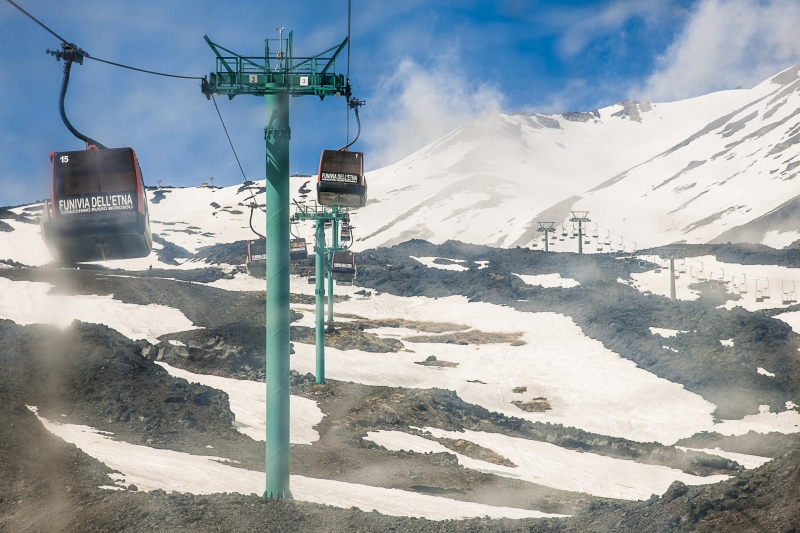
The Monti Silvestri are among the most distinctive landscape features. They are two inactive craters formed as a result of the 1892 eruption. The Nicolosi Nord–Etna Sud station (Rifugio Sapienza) is important for navigating the higher areas of Mount Etna: it is located in the Nicolosi area at an altitude of 1,910 metres and offers tourist services for ascending to the summit areas of Mount Etna. This makes it possible to view a stay in the town, volcanological exhibitions, and the higher-elevation landscape as different components of the same trip, without turning them into a single type of visit.
Trails with Different Profiles
The Sentiero del Germoplasma is approximately 1,153 metres long and has a gentle gradient of 7 percent. Its special surface makes it easier for people with mobility impairments to use. The trails at the Monti Rossi start from a different location: the access point is on Via Goethe near the Monti Rossi Adventure Park in the northern part of Nicolosi. This precise location is useful when choosing accommodation if you would like to include walks and excursions in the northern part of the town.
Cava Asero is also located north of Nicolosi. This disused lava quarry reveals the layers of old and new lava flows. A nature trail was created there along a restored municipal path, leading to the front of the 2001 lava flow. The Schiena dell’Asino trail can be walked in any season, provided there is no snow. This means that the surrounding area offers both a short trail described as having a gentle gradient and geology-focused landscape routes with clearly named starting points.
Churches, Monuments, and a Local Bread Name
The town itself is also home to various historical sites. Tre Altarelli is an 18th-century monument with three arches. It was built at the place where the lava flow from the 1766 eruption came to a halt and depicts Nicolosi’s three patron saints. The Chiesa Madre was built in the first half of the 18th century based on a design by Vaccarini. The Madonna del Carmelo church in Nicolosi also dates from the 18th century.
The Monastero di San Nicolò l’Arena was built from lava stone. The ancient monastery of San Nicolò l’Arena was a former abbey seat. A culinary speciality is the Pane nero di Immanu associated with Nicolosi, which is also called Irmana, Irmanu, or Germanico. This traditional bread consists of 80 percent rye flour and 20 percent durum wheat semolina.
Getting There and Further Travel Ideas
A bus service starts in Catania at Piazza Papa Giovanni XXIII, reaches Nicolosi, and then continues to the tourist and sports station Etna Sud (Nicolosi Nord). For further travel ideas, you can also open the pages for [Valverde](Valverde), [Viagrande](Viagrande), [Grammichele](Grammichele), [Bronte](Bronte), [Aci Catena](Aci Catena), [San Giovanni Montebello](San Giovanni Montebello), [Adrano](Adrano) and [Militello In Val Di Catania](Militello In Val Di Catania).
For the higher-level travel overview: Catania.
