
Discover Cefalù: Cathedral, La Rocca and Historic Sites
Accommodation in Cefalù
Cathedral and Museum: Cultural Highlights
For the overarching travel overview: Palermo.
Relevant information for planning your trip:
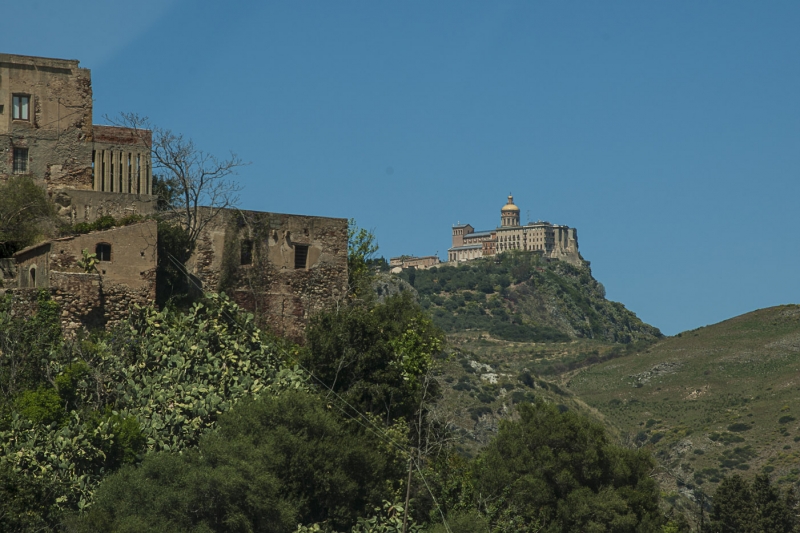
Cefalù combines impressive heights, exceptional cultural monuments and clearly recognisable traces of different eras. Between La Rocca di Cefalù, the Cathedral and historic paths, a multifaceted picture of the town emerges: you can combine landscapes and city views with art, archaeology and the history of everyday medieval life. This makes Cefalù particularly suitable for a trip where several different discoveries matter, rather than just a single highlight.
The Cathedral of Cefalù is one of the monuments included in the serial UNESCO World Heritage Site “Arab-Norman Palermo and the Cathedral Churches of Cefalú and Monreale”. It is therefore part of a broader art-historical and architectural context that extends beyond the individual religious building.
The Museo Mandralisca offers another perspective on history. This interdisciplinary museum brings together archaeological objects, an art gallery, a malacological collection, a coin cabinet, furniture and other valuable items. Its central work is Antonello da Messina’s “Ritratto d’ignoto marinaio”. For your visit, this means an impressive breadth: you will encounter not just a single art collection, but different groups of objects that reveal various aspects of culture and the past.
La Rocca di Cefalù and Its Historical Traces
La Rocca di Cefalù is a 270-metre-high limestone rock offering views over the town. The ascent follows an uphill path surrounded by greenery. Halfway up, it is bordered by high medieval crenellated walls. The route therefore combines the physical experience of the climb with a clearly recognisable historical element. The Tempio di Diana lies on the western slope of La Rocca. Its later construction phase is dated to the 2nd century BC. There is also a cistern nearby, dated to approximately the 9th century BC, which is interpreted as having been connected with a pagan water cult. The approximate dating and cautious classification make it clear that different chronological layers can be considered side by side here. The Strada Romana in the Corte delle Stelle also leads back to an earlier era. It is a six-metre-long section of well-preserved paving from the Hellenistic-Roman period of Cefalù. Together with the Tempio di Diana and the cistern, it offers a concentrated insight into the town’s long history.Water, Fortifications and Paths in the Town
The Lavatoio medioevale shows another immediately tangible side of Cefalù. It can be reached via a staircase known as the Lumachella, which leads to a partially covered area with several wash basins. The water comes from the Cefalino River and flows through 22 cast-iron outlets shaped like lions’ heads into the basins. It is precisely this combination of the architectural structure, water flow and decorative details that makes the site a historical attraction in its own right. Those who would like to experience the fortifications from another direction can walk fully along a rocky path beside the structures, starting from the Presidiana marina. The Bastione di Capo Marchiafava adds another perspective: this imposing 17th-century defensive bastion has an impressive viewing point. For your further search around Sicily, in addition to Cefalù you can discover Giardinello, Bisacquino, Roccapalumba, Mondello, Bolognetta, Altofonte and Parrini.More about the destination
Advertisement · We may receive a commission if you book.
